
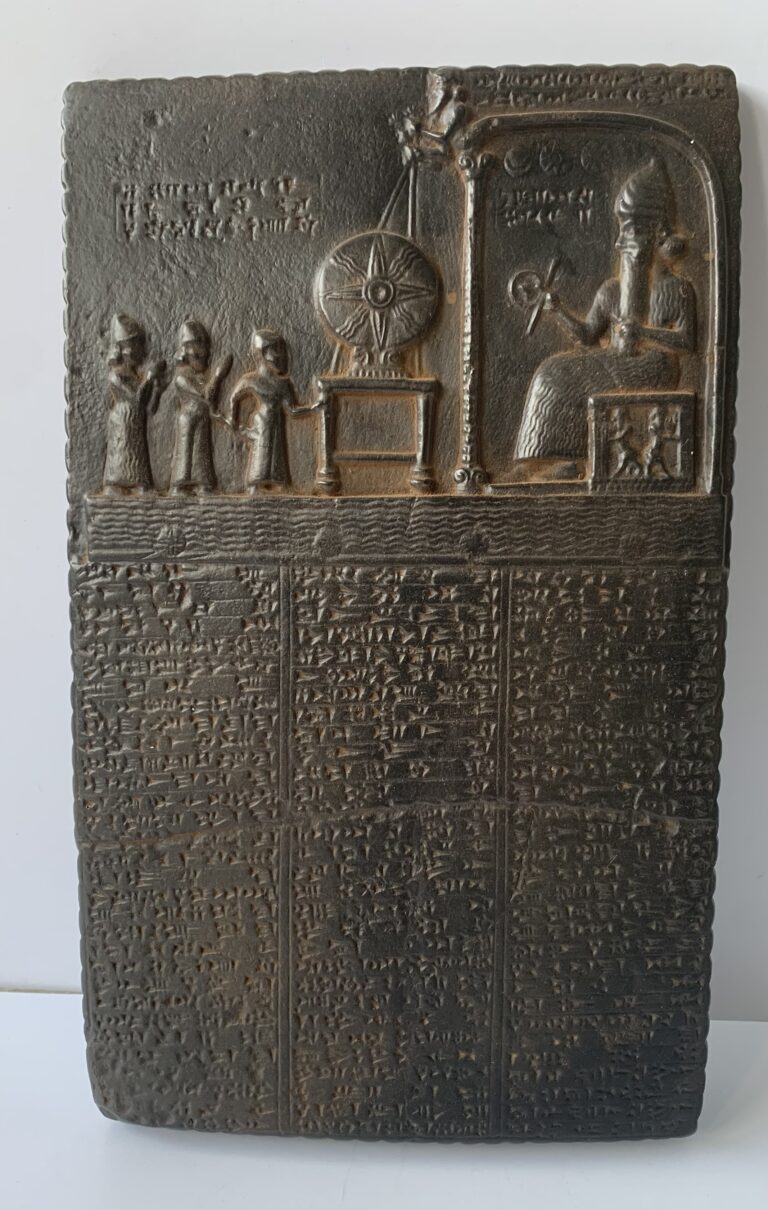
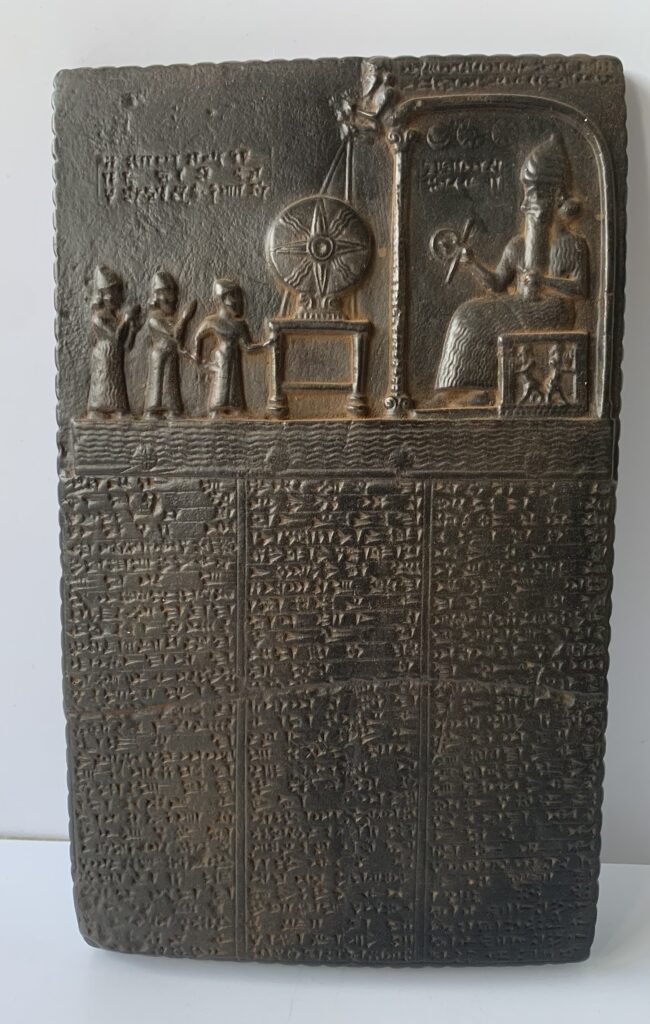
O Selo de Ishtar, Enki, Ea e Shamash – British Museum
As divindades astrais
Junto das divindades celestes, estavam as divindades astrais, entre as ocupavam lugar importante. um quais as solar O Sol era considerado fonte de vida e manancia luz, e, portanto, se ligava à racionalidade, à justiça e ao conhecimento. Mas era também um símbolo do fogo destruidor que, com seu desaparecimento diário, originava as trevas.
Era venerado na Mesopotamia, sobretudo, por seus atributos racionais e positivos, como deus da justiça, juiz por excelência e vingador do mal Era conhecido com o nome de Shamash, e entre suas funções estava a de tutelar os adivinhos, em virtude da sua onipresença. No decorrer do II milênio, foi atribuída a característica solar ao deus nacional, como no caso de Marduk, o deus da Babilônia que de divindade local passou a assumir uma conotação universal.
O deus Assur passou pelo mesmo processo, embora o seu culto fosse menos difundido do que o de Marduk. De Assur, que durante o Império Neo-assírio representava todo o poder divino e que reduziu os outros deuses a membros de sua corte, se temia, principalmente, o terrível esplendor.
Fonte: Pedra procedente de um templo de Sippar, com o deus Shamas e o disco solar (meados do século IX a. C.).
Stone from a temple in Sippar, with the god Shamash and the solar disk (mid-9th century BC)
The Astral deivities
Along with the celestial deities, there were the astral deities, among which they occupied an important place. one which as solar The Sun was considered a source of life and emanates light, and, therefore, was linked to rationality, justice and knowledge. But it was also a symbol of the destructive fire that, with its daily disappearance, gave rise to darkness.
He was venerated in Mesopotamia, above all, for his rational and positive attributes, as god of justice, judge par excellence and avenger of evil. He was known as “hama”, and among his functions was to protect diviners, due to the its ubiquity. During the 2nd millennium, a solar characteristic was attributed to the national god, as in the case of Marduk, the god of Babylon, who from a local divinity began to assume a universal connotation.
The god Assur went through the same process, although his cult was less widespread than Marduk. Assur, who during the Neo-Assyrian Empire represented all divine power and who reduced the other gods to members of his court, was mainly feared of melammu (terrible splendor).
Divulgado por